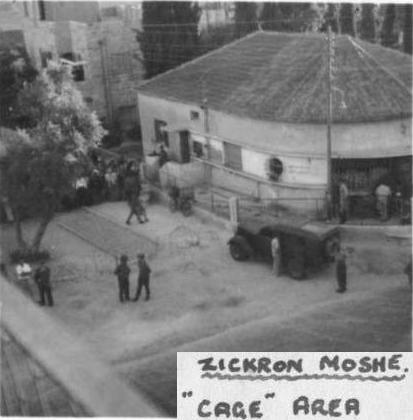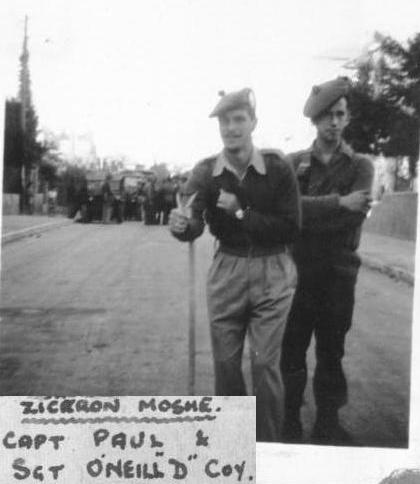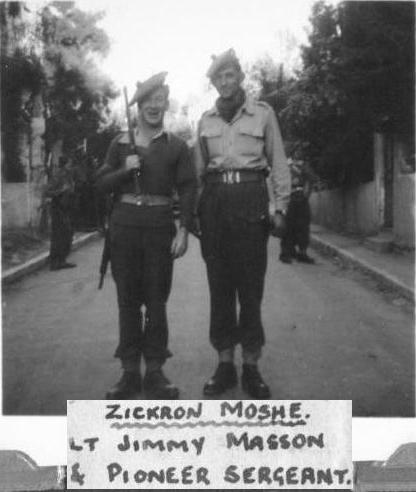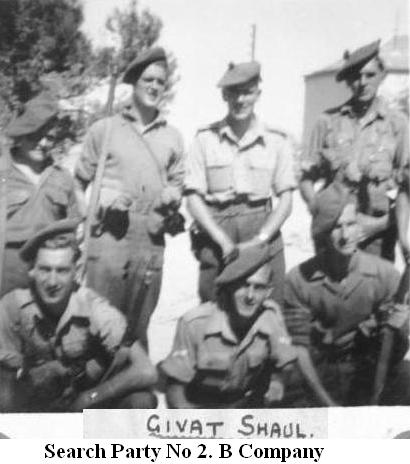
1st Battalion

The Argyll and Sutherland

Highlanders


Palestine 1945 - 1948


 All photographs are the property of RHQ Argylls and may not be reproduced or copied without permission from RHQ Argylls.


PALESTINE - INTERNAL SECURITY DUTIES


Osgodby Camp, Lincolnshire, England. The end of the war with Japan cancelled the move of the Battalion to India to rejoin the 8th (Indian) Division, and its future destination remained uncertain until 1st October 1945, when it was warned for service in the Middle East and two days later it was ordered to reorganise on an Air Landing Battalion War Establishment. This entailed the abolition of the Administrative Company and the reconstitution of 'S' Company.

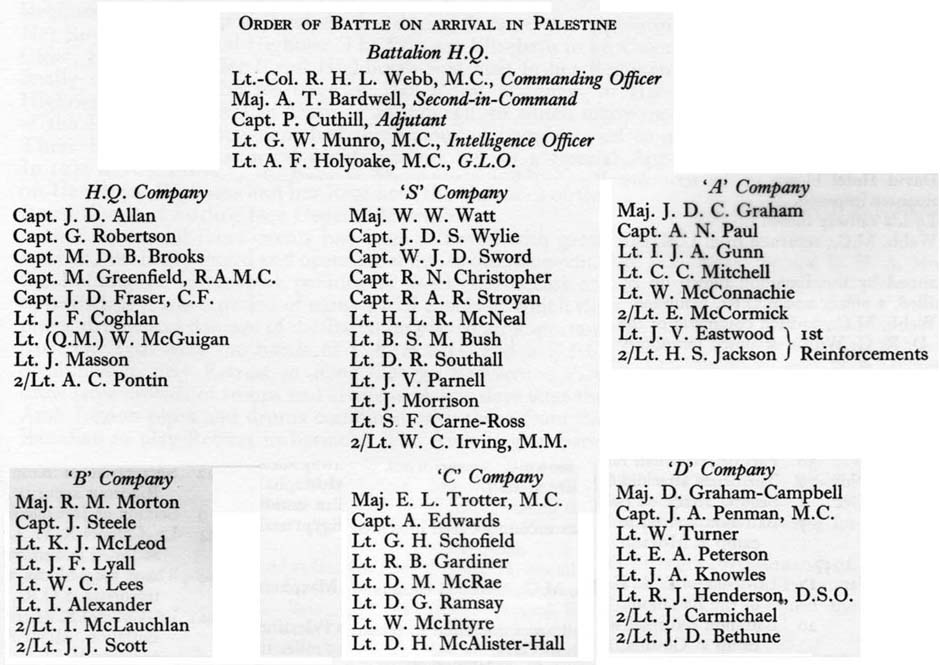
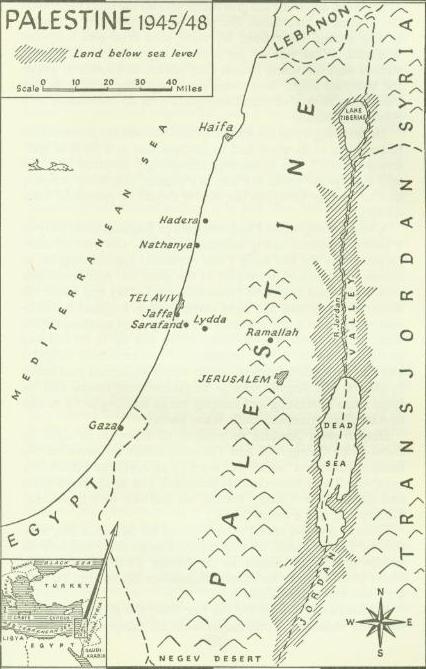
By 9th October it was known that the Battalion was to join the 6th Airborne Division in Palestine and that it would move on or about the 22nd, preceded by an advance party which was to sail on the 11th. It was on the 26th that the Battalion embarked at Liverpool in S.S. Ascania, which sailed at 1 p.m. the following day. The ship was comfortable, but conditions were unpleasant at first on account of bad weather. After Gibraltar the weather was fair, and on 6th November 1945 S.S. Ascania berthed at Haifa, the port to which H.M.T. Somersetshire had brought the pre-war 1st Battalion in May 1939, but in other respects there was no similarity between the two occasions. The Battalion bore no resemblance to its predecessor of 1939. Whereas in 1939 the Battalion was composed entirely of Regular officers and soldiers, now only a few of its officers and N.C.Os. were regulars and many had been posted from other Highland and Lowland units. The great majority were short-service officers and men, and although the date of their release must have been uppermost in the minds of many, their loyalty to the Regiment in which they found themselves to be serving, their discipline and their morale remained unshaken throughout their service in the Middle East. The Battalion disembarked immediately, and as each Company filed down the gangway the pipe band, already on the quayside, struck up the Company march past. The Battalion was accommodated in Camp 21, some 35 miles from Haifa and 6 from Tulkarm; it was a tented camp, except for offices and messes, which were in brick buildings. The strictest precautions had to be taken to guard the whole perimeter of the camp, and this involved the use of a whole company each night on guard duty, in section posts, distributed round the perimeter. The total strength of the Battalion in Palestine was 56 officers and 938 other ranks, a total of 994 all ranks against a war establishment of 1012.

        The position that confronted the Battalion now was very different to that with which the old Battalion had to deal. It was then an Arab rebellion that had to be crushed and Jewish life and property that had to be defended. By 1940 the Arab rebellion had been successfully overcome, leaving the Arab population fairly badly shaken but not without certain gains.

In 1939 the Government published a white paper, and the three main points it dealt with were:

            (a) Future Constitution of Palestine.

(b) Limitation of Jewish Immigration.

(c) Restriction of land sales by indicating

                        (i) a zone in which Jews could buy land,

                        (ii) a zone in which Jews could buy land with the consent of Government.

                        (iii) a zone in which Jews could not buy land.


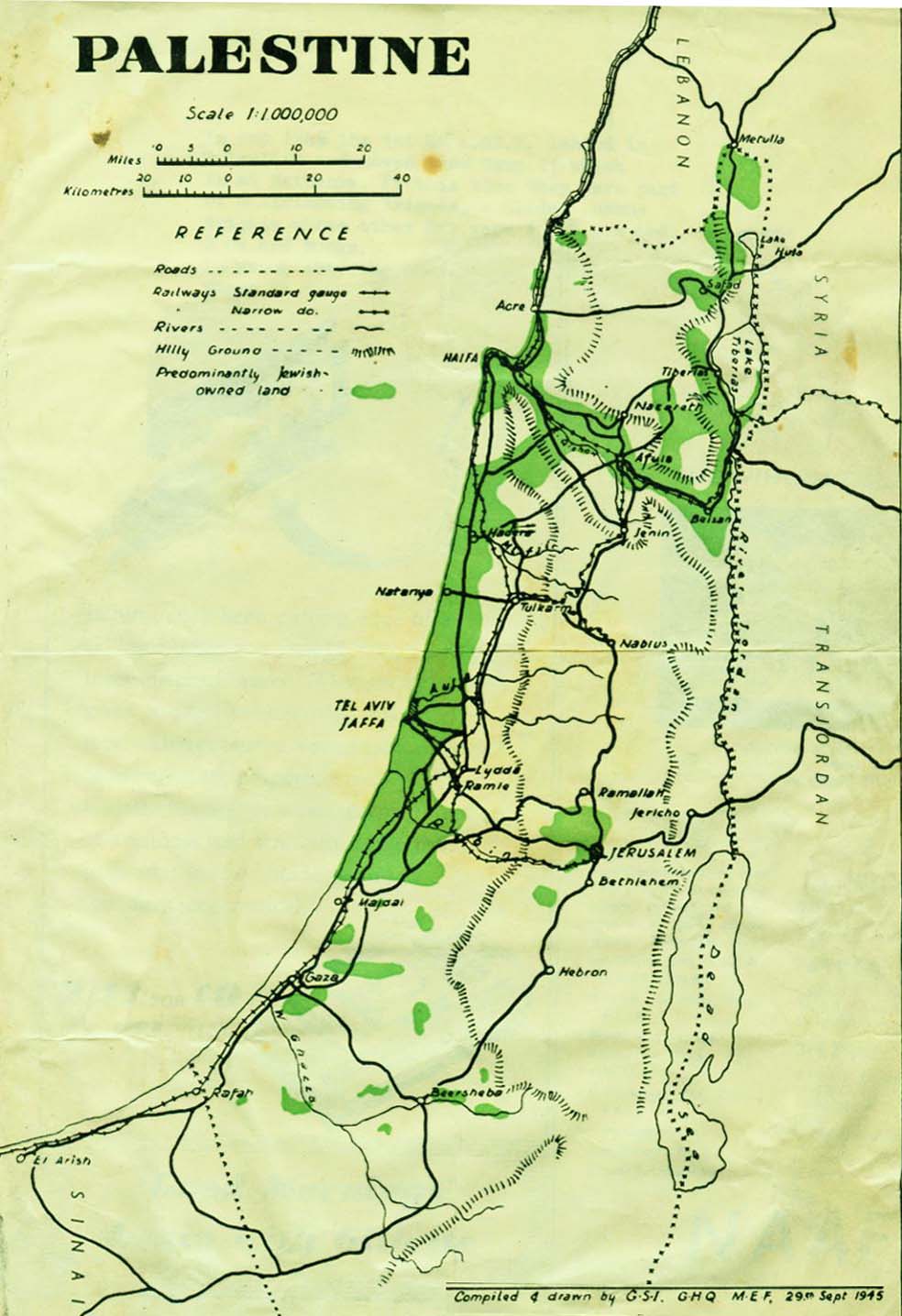
Despite the fact that both Arabs and Jews rejected the white paper, and the Arabs protested violently at the time, there can be little doubt that the limitation of Jewish immigration, coupled with the restriction of the sale of land, was a serious blow to the aims of the Jews and a starting-point for the open rebellion that followed later, the first shot of which was fired at Tel Aviv in 1940.

            The Jewish defence organisation was centred in the Haganah (defence force). From the first establishment of Jewish colonies in Palestine there was a defence organisation of watchmen who were responsible for the defence of the settlements. As these settlements grew, so did this organisation, and in 1936-39

there was open collaboration with the security forces, and they received sound training from both the police and military. After the publication of the white paper co-operation ceased, but even so, during the war, a Palestine Brigade Group was formed and 26,000 Palestine Jews were enrolled.

                In 1940 the two extremist groups, Irgun Tzvai Leumi (National Military Organisation) and the Stern Group (Fighters for the Freedom of Israel), broke away from Haganah. These two groups considered that the Arab policy of rebellion had paid good dividends, and they set out to achieve their own ends by sabotage and assassination. To begin with, Haganah made some attempt to control these groups, but after the war both their inclination and ability to do so became less and less.


After the end of the war in the Desert there was constant trafficking in arms from the scene of operations to Palestine, and it was in this way that the terrorist organisations built up their strength and perfected their methods and training. From 1940 onwards, therefore, the security forces had to make a complete change of front, and in November 1945, when the Battalion arrived in Palestine, it found itself confronted by well-armed and well-trained organisations whose avowed policy was to further the Jewish cause by the destruction of all who opposed it.

            The duties the security forces were required to perform were many and varied, and there was always the strain and tension of living in wired-in compounds and keeping a continual vigil in a hostile land where there were constant and brazen attempts on life and property and where military arms and stores were always in danger from well-planned attacks. At first the novelty of the work in which they were engaged kept all ranks very much on the alert, but as time went on and the situation deteriorated and freedom of movement was restricted, the chief enemy was not the Irgun or Stern gang, but boredom, brought about by the monotony of constantly guarding wire perimeters, and by the necessity of moving in armed parties of not less than four when outside these perimeters.

           The Battalion soon settled down in Camp 21, where it joined the 6th Air Landing Brigade commanded by Brigadier R. H. Bellamy, D.S.O. The other two Battalions were 2 Oxford and Bucks L.I. and 1 R.U.R. On 12th November Major-General E. L. Bols, C.B., D.S.O., visited Camp 21 and welcomed the Battalion to the Airborne Division.

Trouble was not long in coming; it had been anticipated in one or more of the danger spots, Tel Aviv, Petah Tiqva, Benei Berao, Ramatyim and Rehovot, and precautions to meet it were taken on the 13th, when all ranks were confined to camp between 5 p.m. and 7 a.m. Extra road-blocks were set up and jeep road patrols carried out every morning. On the 14th it came in Tel Aviv, in the shape of processions of Jewish youths shouting anti-British slogans. British troops were called in to assist the Police, who had eventually to open fire. The Battalion was not involved, but the Intelligence sergeant, Sgt. Hall, who had been on duty in the town, had witnessed and reported the demonstrations. He was stoned in his jeep when leaving the town.

            Trouble started again on the 25th, when the coastguard stations of Givat Olga and Sidna Alt were attacked, and in an effort to arrest the culprits the Battalion was given the task, in collaboration with the police, of clearing and checking the village of Givat Hayim. This was done on the 26th, but not without some difficulty on account of resistance within the village and threats of attack from outside. The troops employed had done well and kept their tempers in spite of great provocation. The result of the round up was

            (i) The arrest of 10 of the 13 Settlement Police who had been responsible for the attack on the coastguard stations.

            (ii) 50-odd weapons confiscated from Settlement Police.

            (iii) 1 Jew killed, 15 wounded and 137 arrested.

On 29th November Brigadier R. H. Bower, CBE., who had assumed command of 6th Air Landing Brigade, visited the Battalion. It is interesting to note that a call for volunteers to undergo a parachute-jumping course was answered in the affirmative by 22 officers and 158 other ranks.

            There was nothing to disturb the normal routine during December. Training exercises were carried out and the Battalion football teams (rugger and soccer) were able to arrange and play a number of matches. The end of the year found the Battalion still in Camp 21, and nothing intervened to prevent the traditional celebration of Hogmanay.

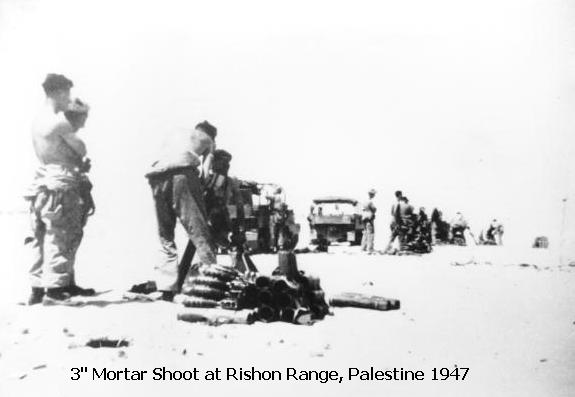
            For the first three months of 1946 the Battalion remained in Camp 21 and the period was again devoted mainly to training. During this period the mortar platoon won the Brigade mortar competition. The only interruption occurred on l0th February, when the Battalion was allotted a sector of the cordon thrown

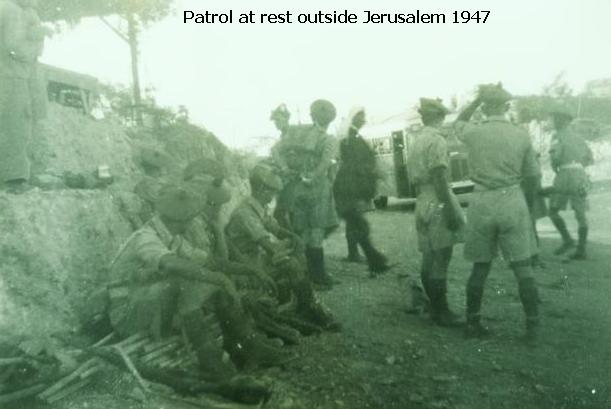
round Hadera while a search was carried out. Another small break to the growing monotony occurred on 26th February, when the terrorists staged attacks on a number of aerodromes. In reply, a curfew was imposed on all civilian vehicles from 6 p.m. to 6 a.m. daily. On 19th March the Battalion was warned to be ready to relieve 2 Royal Warwicks in Jerusalem. 'C' Company moved in on the 28th to take over the guard duties, and the remainder of the Battalion followed on 30th March.

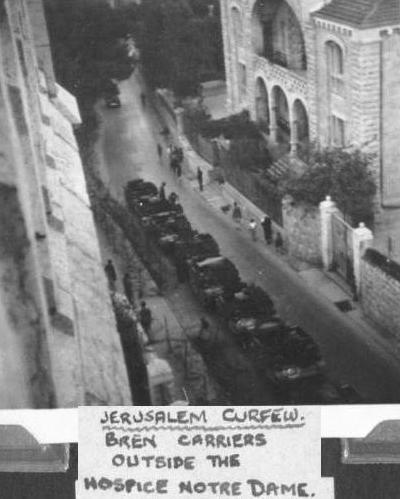
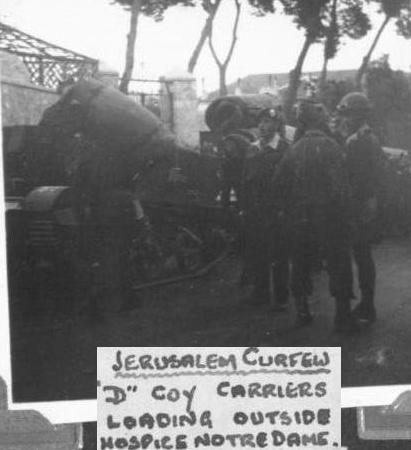
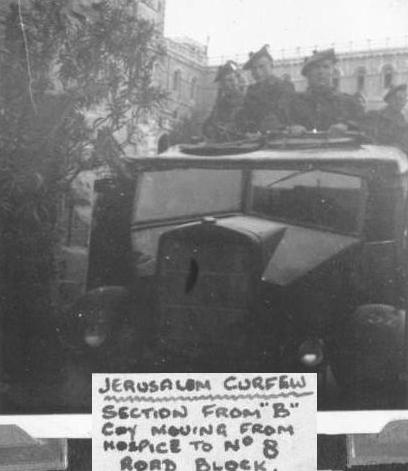
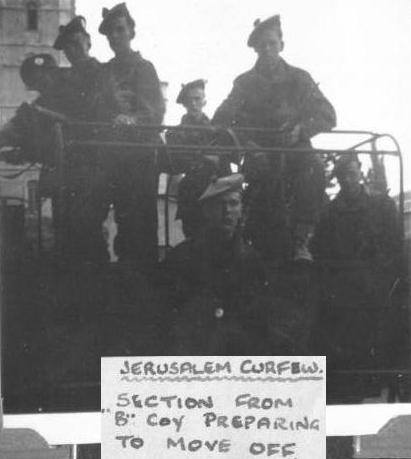
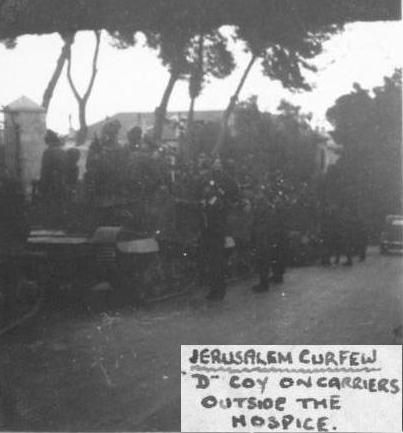
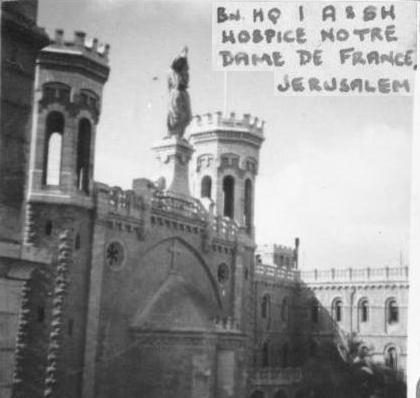
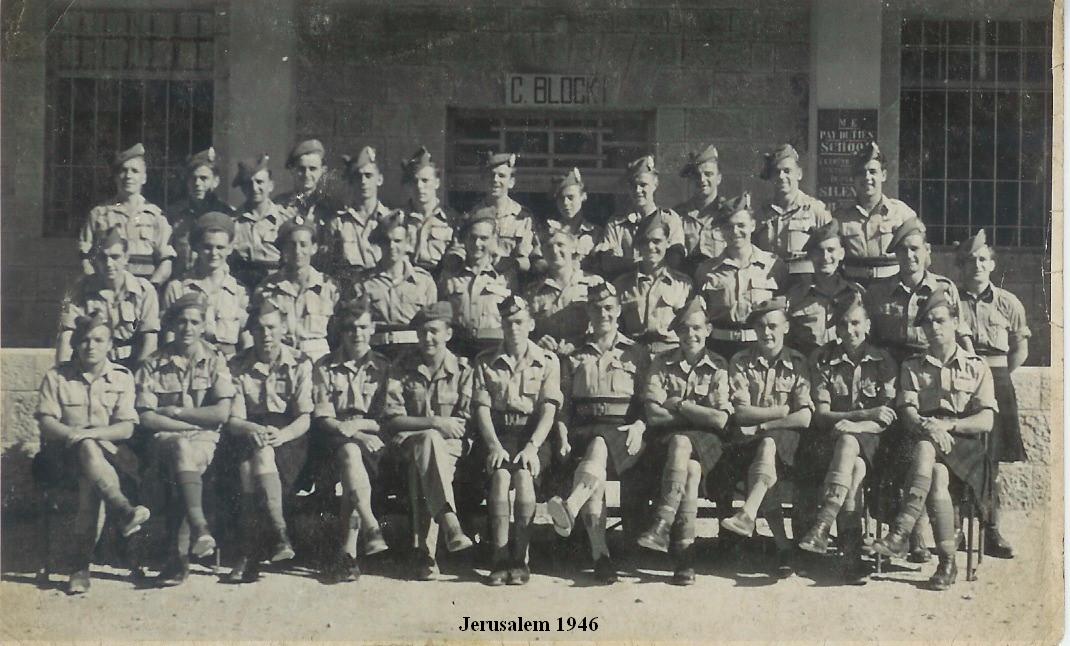
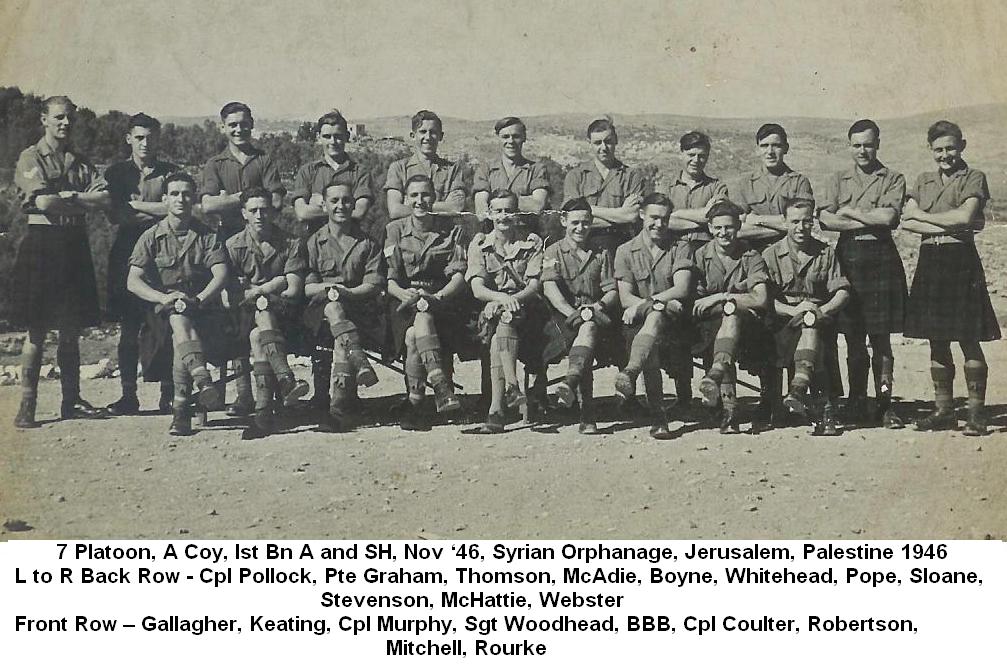
             Here the Battalion was accommodated in two localities with Headquarters, 'B' and 'D' and half 'S' Company in the Hospice de Notre Dame de France, opposite the new gate of the old city, while 'A' and 'C' and half 'S' were in the Syrian orphanage in the west of the city. The Battalion was now in 31st Independent Brigade under command of Brigadier R. H. Bower, C.B.E.

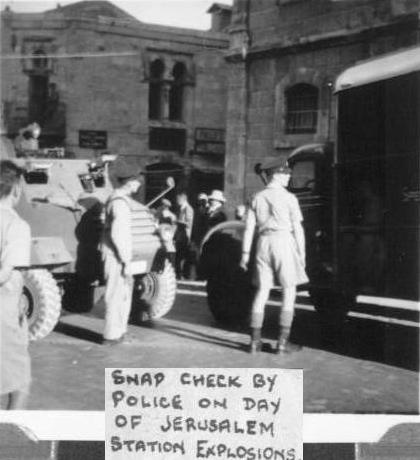
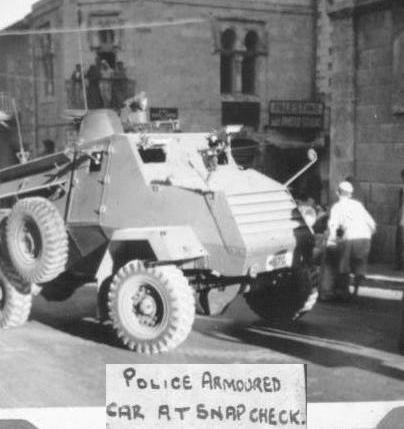
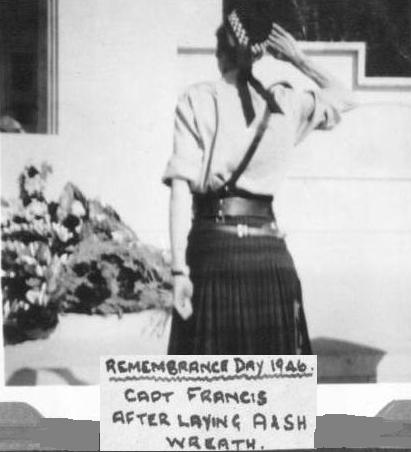
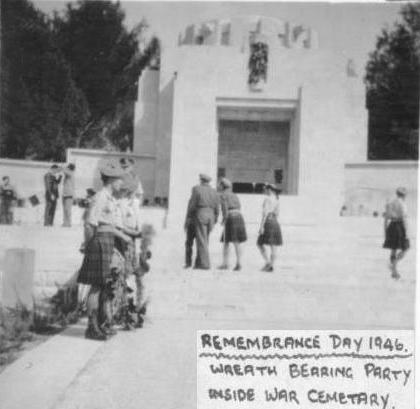
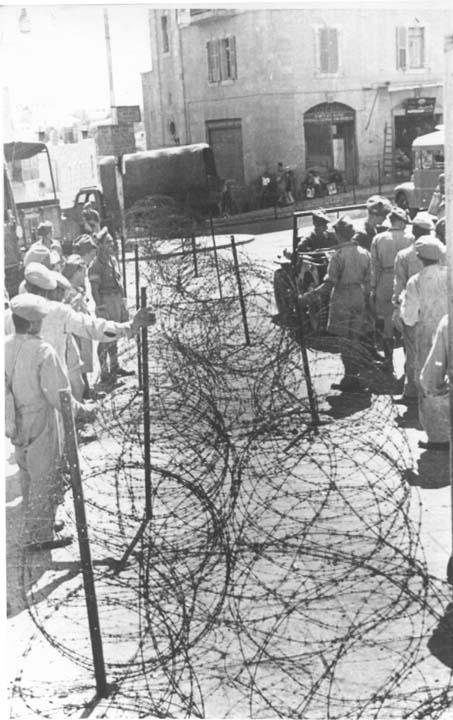
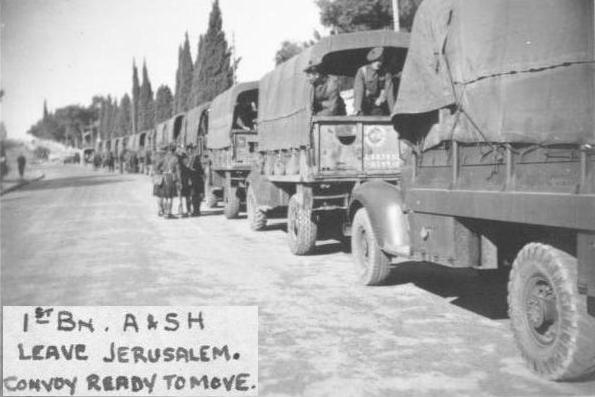
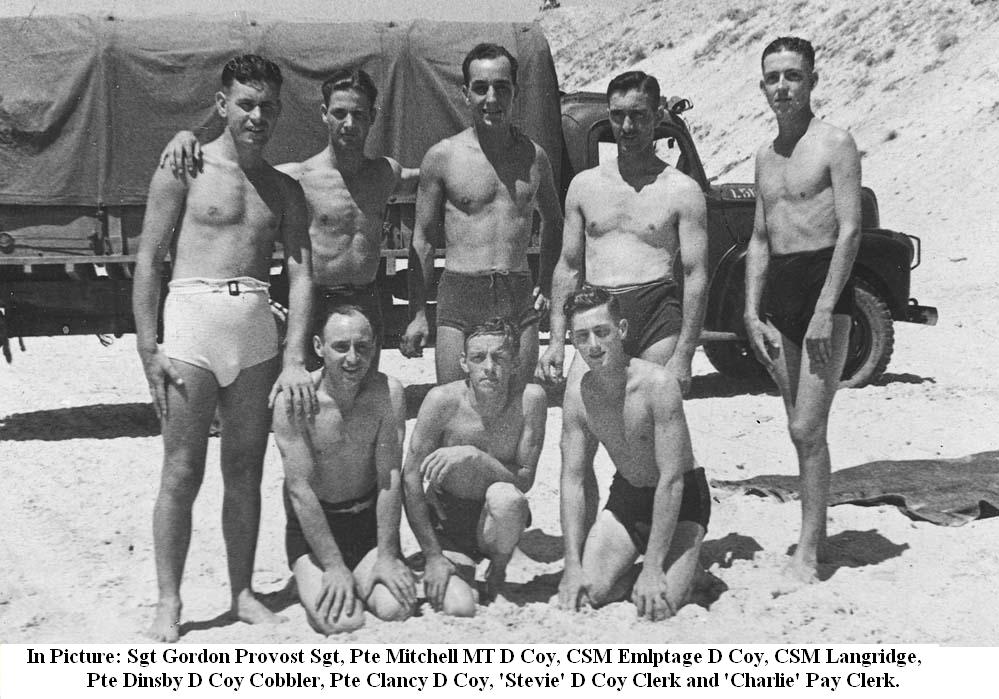
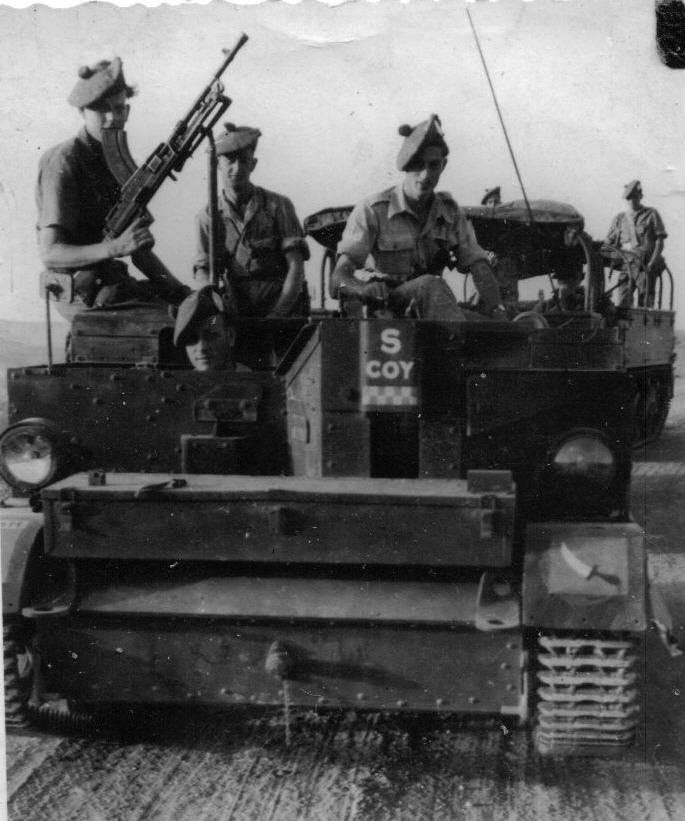
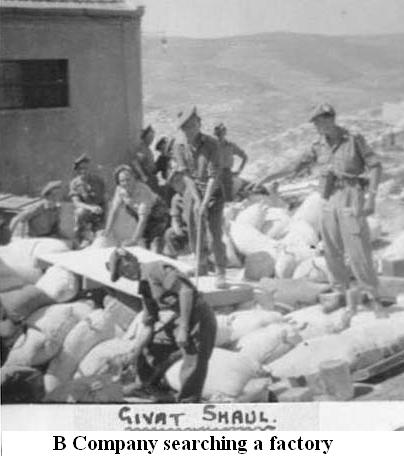
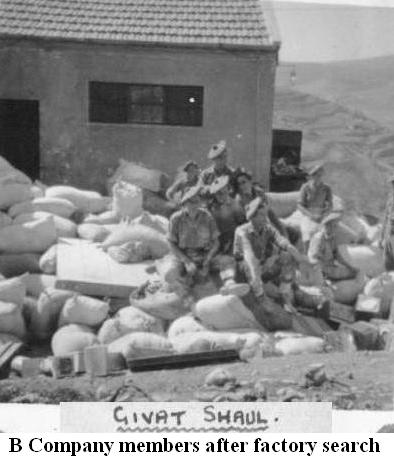
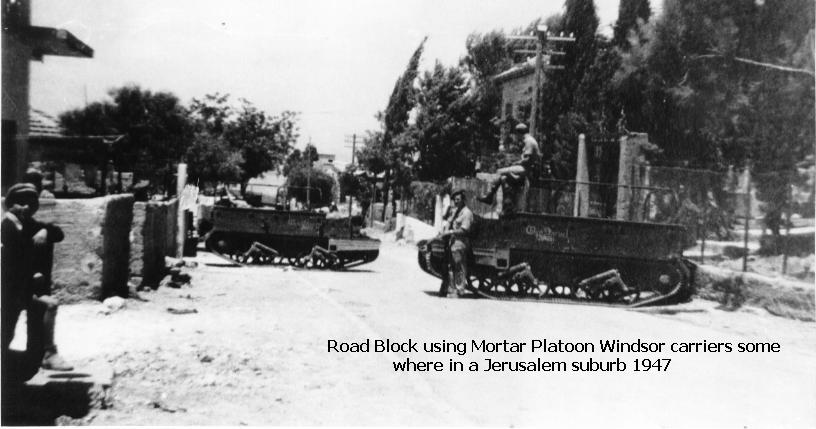
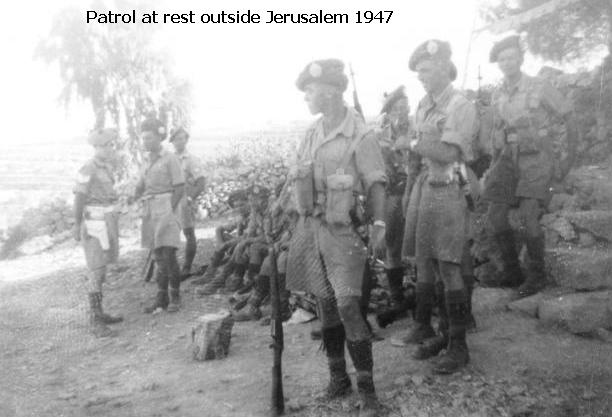
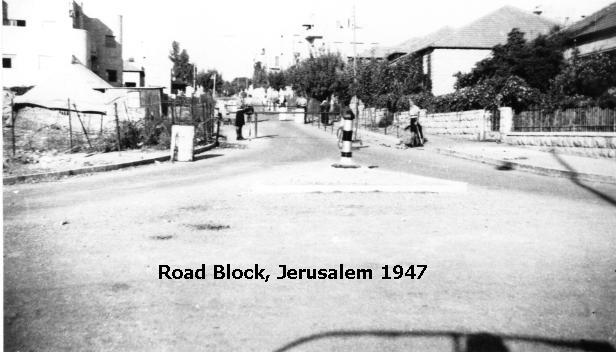
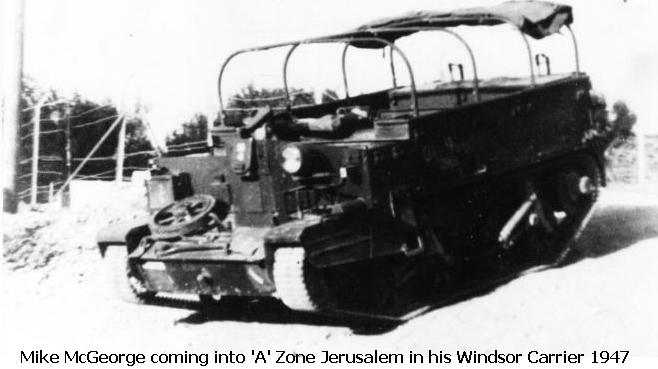
Many thanks to Mike McGeorge who sent me Sandy Ward's collection of photograph's of his time in Palestine. This selection is of Jerusalem.
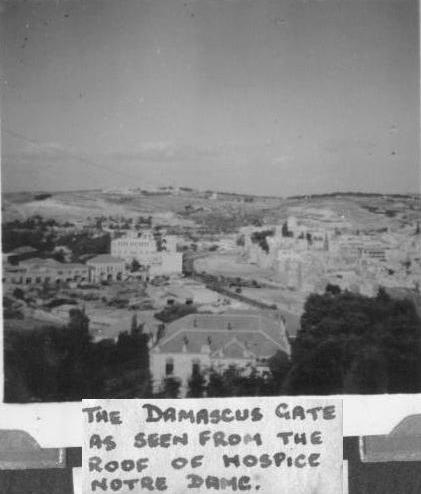
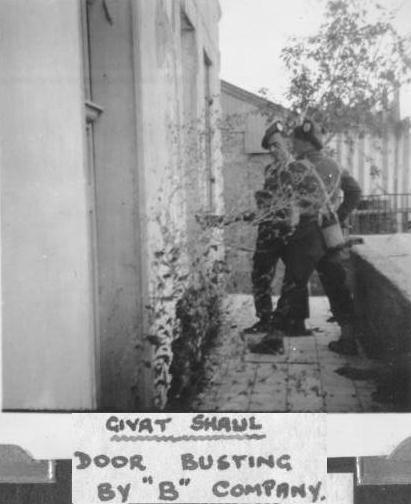
Click picture to enlarge.


             Commitments in Jerusalem were very heavy. Guards on Government buildings and police stations, constant patrolling and periodical searches of Jewish quarters made it almost impossible to carry out any regular programme of training, but a training wing was formed for young N.C.Os., specialists and small unit training, as individuals and units could be made available.

            On 1st May the Allied Commission on Palestine published its report, but it caused no trouble on account of its pro-Jewish nature. On 3rd May the Arabs started a small demonstration round the Damascus Gate; rocks were thrown from the Old City Wall into the car park, and several vehicles were damaged. Two other ranks were injured and three Arabs arrested.

            On 14th May an attempt was made to capture a jeep in which Lt. McRae and Cpl. Brown were travelling. The jeep, which had been immobilised during a halt at Petah Tiqva, was surrounded by armed terrorists, who tried to get Cpl. Brown to start it up. On his refusal, they saturated the seats with petrol and set it alight. Cpl. Brown was able to extinguish the flames before much damage had been done.

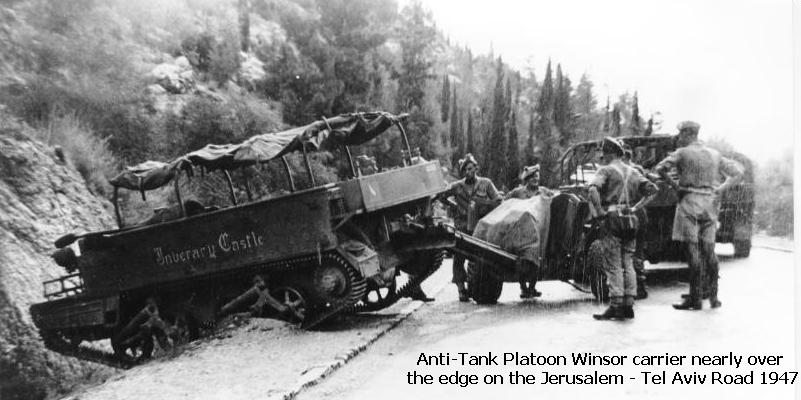
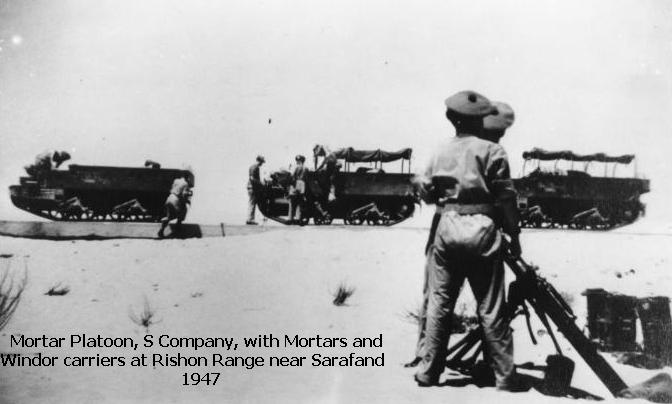
        On the 17th the G.O.C. Palestine, Lt.-General Sir Evelyn Barker, KBE, CB, DSO, MC, visited the Battalion and inspected training. On 25th May, 'S' and Headquarter Companies changed over from Airborne to Infantry Establishment. The Pioneer platoon went to 'S' Company, while the Carrier platoon was formed and commanded by Lt. D. M. McRae.In the middle of June terrorist outrages increased all over Palestine. On the night of the 16th, several bridges, including Allenby Bridge, were blown up between Palestine and Trans-Jordan. The following night Haifa railway yards were fired and five officers were kidnapped from Tel Aviv Officers' Club, while two others were wounded outside an Officers' Club in Jerusalem. As a result of these outrages, officers were ordered to go about in pairs and armed, or with an armed escort. On the 19th one of the kidnapped officers, Major Chadwick, escaped, and the next few days were spent in searching the house and area in which he had been confined, but no trace of the others could be found. Exercise 'Agatha' was staged on 28th and 29th June, an internal security operation, the object of which was to cordon and search the Jewish Agency. The operation took place simultaneously at other centres in Palestine. It started with a swoop on the residences of important members of the Agency, nine of whom were earmarked for arrest by the Battalion. Road-blocks were established and curfew imposed. The operation was successful and many arrests were made.

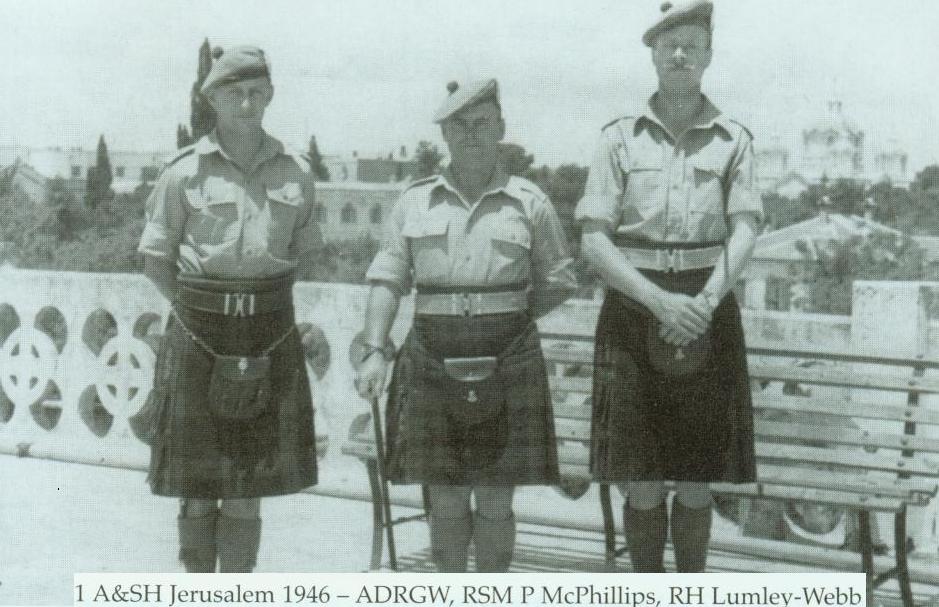
On 14th July Lt.-Colonel R. H. L. Webb, M.C., left Jerusalem en route for U.K., where, after a short course at Warminster, he was to be granted end of war leave. Major A. D. R. G. Wilson, M.B.E., assumed command of the Battalion. 

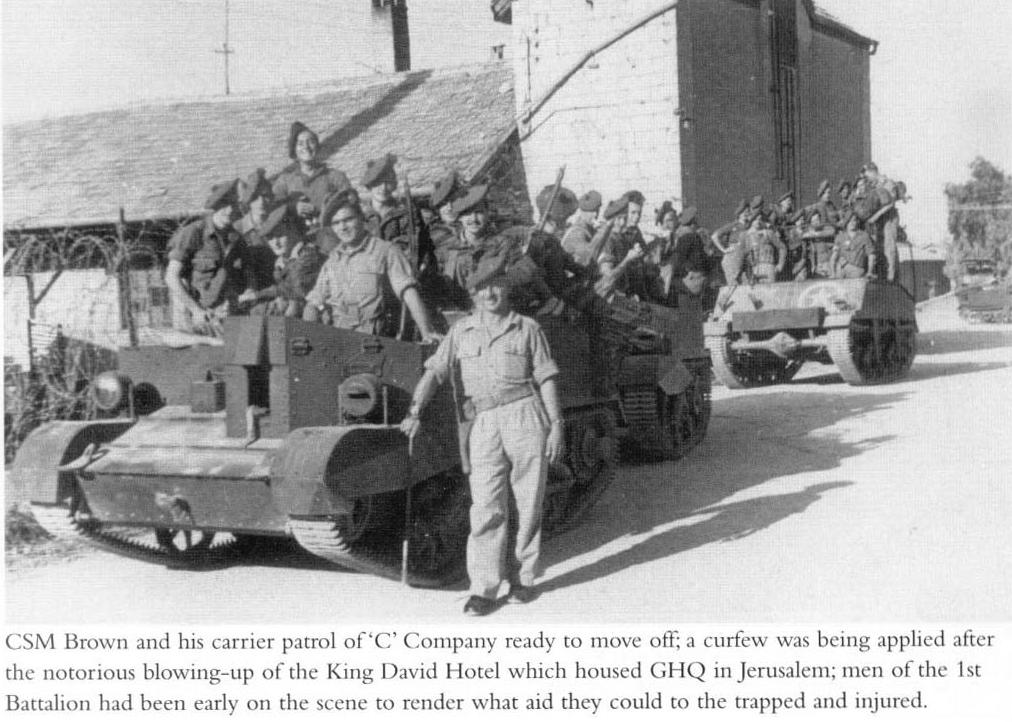
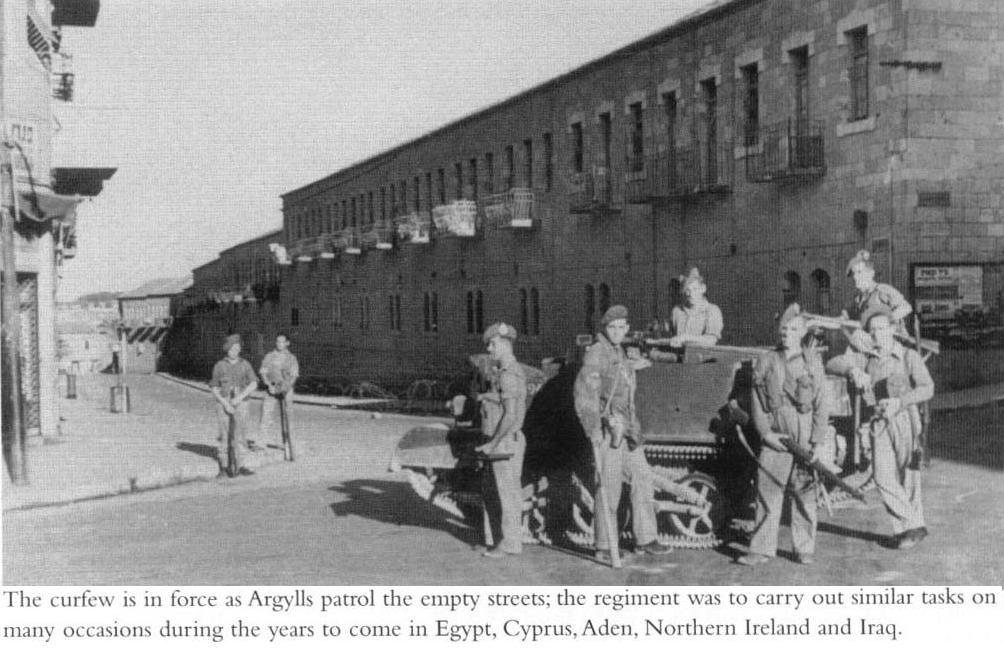
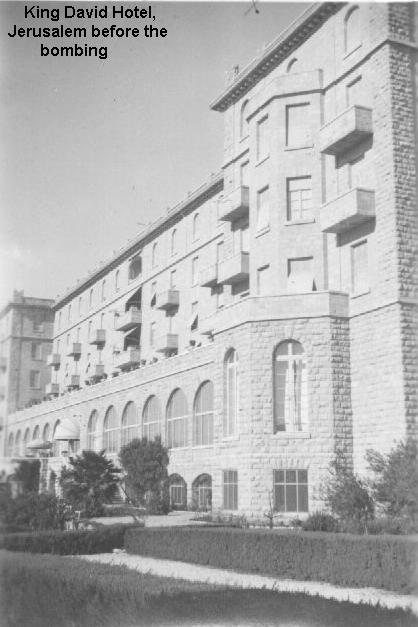
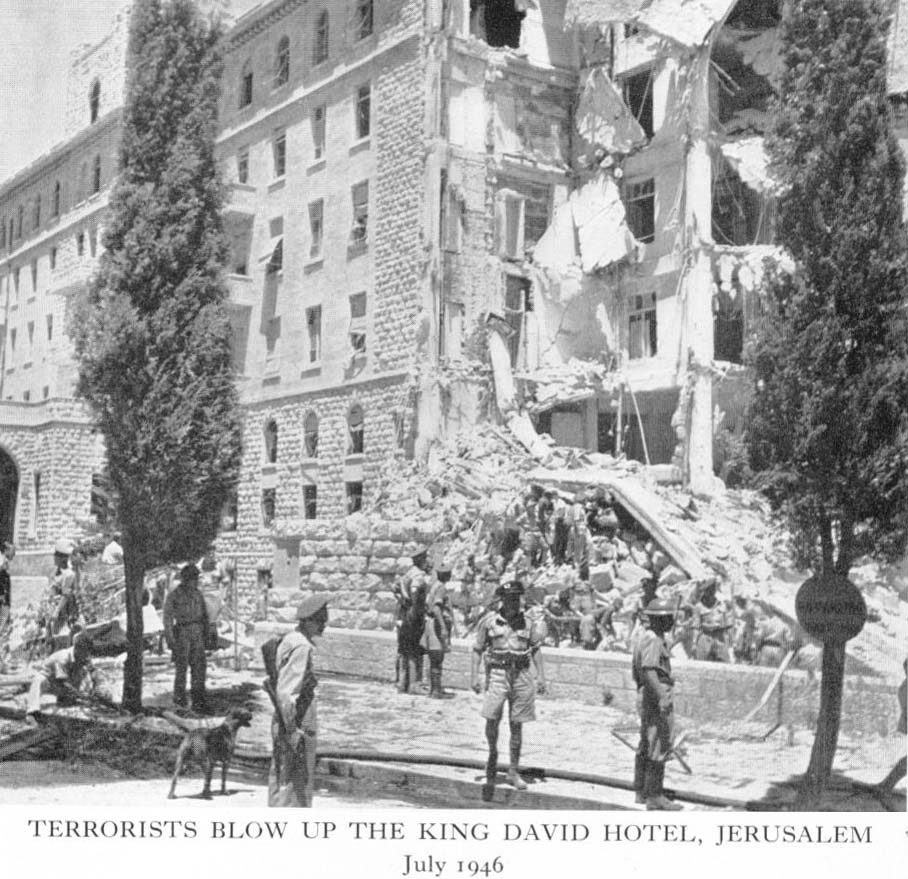
            A week later there occurred the most serious incident of the terrorist campaign in Palestine, when on 22nd July a wing of the King David Hotel was blown up. The King David Hotel housed both G.H.Q. Palestine and the Civil Government Secretariat, the latter being in the end block. The basement, ground floor and first floor were open to the public, who could enter with no security check at all. In the basement, and directly under the secretariat block, was the military telephone exchange, switchboard and the Regence restaurant. Just before midday on the 21st a party of four men, dressed as Arabs, drove to the service entrance and began to unload six large churns, which they trundled down the corridor to the Regence restaurant, which was then empty. Any of the hotel staff found on duty were held up and made to keep quiet. By chance, an officer from G.H.Q. happened to go into the restaurant, and when he saw what was occurring opened fire with his revolver. He was badly wounded, but managed to crawl upstairs, where he collapsed from loss of blood without being able to speak. The civil and military exchange operators had been warned by an unknown caller to evacuate the Hotel, which was to be blown up. The warning was disregarded, and when the explosion occurred the office staffs were still at their desks. It smashed the main steel foundation that supported the secretarial block, and that part of the hotel collapsed like a house of cards, crushing or imprisoning Briton, Arab and Jew alike. The switchboard was wrecked and it was some time before police and military help could be summoned. About 12.30 p.m. the Brigade Major was able to contact the Battalion and call for help. All available officers and men were collected and sent to the Hotel, some by truck and some marching, and on arrival they immediately started rescue work, often at great personal risk. There was, however, little that could be done until the Royal Engineers arrived with their lifting tackle. The Battalion was withdrawn from the scene later in the afternoon in order to impose a curfew on the whole of Jerusalem. There had been heavy casualties, many were dead and many more had shattered limbs. It had been a severe ordeal for many of the younger soldiers, and after the shambles they had just witnessed it was a stern test of discipline when ordered to clear the streets of Jerusalem and impose a curfew. It was done quietly but methodically, many of the elder civilians were helped to their homes. There had been no shooting, no fuss and no violence. After this outrage, snap checks and searches of Jewish areas increased; many road-blocks and check points were established and identity cards were often demanded and examined. Guard and escort duties, already heavy, became even more onerous. The curfew was raised on 7th August.
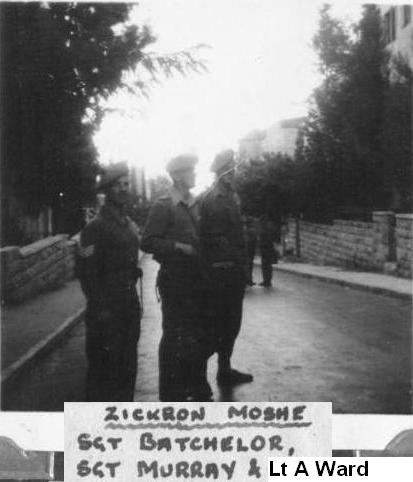
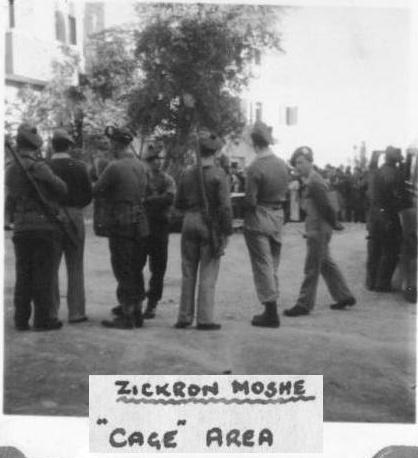
 

Many thanks to Mike McGeorge who sent me Sandy Ward's collection of newspaper cuttings and other memorabilia of his time in Palestine.

Click picture to enlarge.


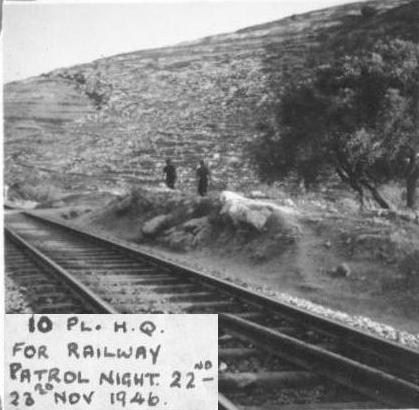
            September saw an increase in tension and an even more vigorous application of internal security measures. The Battalion was involved in numerous small-scale operations, but only on one occasion did it come in contact with the terrorists. On 9th September a portion of the Jerusalem-Lydda railway was blown up five miles from Jerusalem. 'D' Company was sent to try and intercept the terrorists on their return. Contact was made at 1.15 a.m. on the l0th with a party of about 20. Shots were exchanged in the dark, but the suspects, who were in Arab dress, escaped into the woods.

During this period training was almost at a standstill, except for cadre courses for N.C.Os. and specialists, in an effort to make up the wastage due to demobilisation. On 14th September Lt.-Colonel R. H. L. Webb, M.C., returned from leave and reassumed command

            Terrorist outrages continued to increase, and in consequence it was decided to impose another curfew on 19th October, and a few days later the Battalion suffered its first operational casualties. On the 24th explosions occurred close to three of the curfew road-blocks; mines had been cunningly hidden

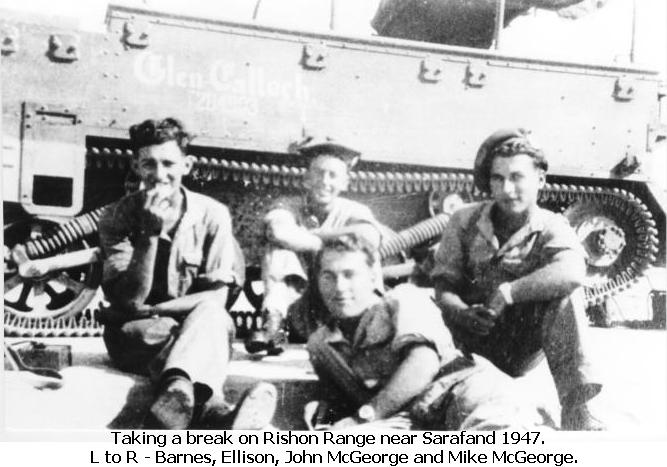
near each road-block, set to explode by a time fuse. One of these was found concealed in a municipal dust-bin but was made harmless by Lt. Masson. These explosions killed 2 other ranks (Cpl. Alcorn and Pte. Buchanan) and wounded 2/Lt. McKendrick and 6 other ranks. One of those wounded was Pte. TL Barnes who was on one of the Road Blocks near King George Avenue and Jaffa Road. He was in 'Support Company' and was the Driver of a Bren Gun Carrier on that night. The other Soldiers on the Road Block were from D-Company. He received a number of Shrapnel Wounds to his 'Head, Neck and Body, quite a few were  removed in Surgery, but he still carries quite a number of Shrapnel pieces, that weren't able to be removed 60 years later. Mines were also exploded in places where troops had been sleeping the previous night.
            October followed the same pattern as September and culminated on the 30th in an attempt to blow up Jerusalem railway station. Two companies under Major Wilson were searching one of the suburbs on the Jaffa road when the news was picked up on the police wireless net that bombs had been deposited in the station. Lt. Masson asked and obtained permission to go and investigate. He took with him Cpl. Smith and the police sergeant who was accompanying the troops

searching the suburb. It appeared that at 2 p.m. a taxi had driven up to the station and out of it got a girl and two men, carrying a suitcase each, covered with an I.Z.L. flag, which they deposited in the left-luggage office. The Arab Legion guard on the roof had heard a warning being given and in consequence fired on the taxi as it moved off and wounded the occupants. Later the car encountered one of the Battalion patrol trucks, which also opened fire, and this caused the occupants to disembark and make for one of the suburbs near the King David Hotel, which was soon cordoned by the Battalion 'stand by' party. On arrival at the station, Masson, Smith and the police sergeant examined the suitcases and carried one to a round-about some fifteen yards from the station entrance. Here they tried but failed to open it. They then cut the fibre and found inside a metal container with no sign of a fuse or igniter. The police sergeant thereupon insisted on returning to the station alone to remove the other suitcases. He and Masson had worked together on the 24th in making safe the mines found near the road-blocks and, to use his own words, he said, 'Look here, there is no point in us all going back into the station and getting blown up, you did it all last time so I'll take a chance now.' He was quite determined, and after seeing Masson and Smith safely under cover, he went into the station, where he was immediately killed by an explosion. At the same time the suitcase on the roundabout also exploded. For this great act of gallantry the police sergeant was awarded the King's Police Medal (posthumously).

            On 28th October Lt.-Colonel R. H. L. Webb, M.C., handed over command of the Battalion to Major A. D. R. G. Wilson, M.B.E.

The 31st Brigade was due to be broken up. The K.O.S.B. were to relieve the Oxford and Bucks L.I., the Lincolns the R.U.R., while 1 A. & S.H. was to come under 9th Brigade until replaced in December, after which it was to join 8th Brigade in Egypt.

            Only minor incidents disturbed the peace during the few weeks before the move to Egypt. One of these, an attack on Mustapha police station on 30th November as the Battalion was preparing to celebrate St. Andrew's Day, might have become serious but for the swift action taken by the Battalion. A second attack on the same police station which took place on 5th December, the day before the Battalion was due to move to Egypt, might have delayed it, but 1 K.O.S.B. managed to relieve the cordoning companies in time to enable the Battalion to get away next day.


Many thanks to Mike McGeorge who sent me Sandy Ward's collection of photograph's of his time in Palestine. This selection is of the battalion's time in Egypt.

Click picture to enlarge.


The Battalion arrived in Egypt on 7th December and was accommodated in a tented camp at Moascar. It joined 8 Infantry Brigade, commanded by Brigadier J. G. Bedford-Roberts (late A. & S.H.), now composed of 1 Suffolk Regiment, 1 South Lancashire Regiment and 1 A. & S.H. The camp was uncomfortable, and living conditions generally compared un-favourably with those in Jerusalem, and not many days had elapsed before many were anxious to return there.

There were, however, many advantages in Moascar; guard duties were light; everybody was able to get a much-needed rest, after the average of three nights in six in bed in Jerusalem; men were able to get out every evening and enjoy the welfare facilities in Ismailia, and the Battalion had the opportunity of refitting, reorganising and training.

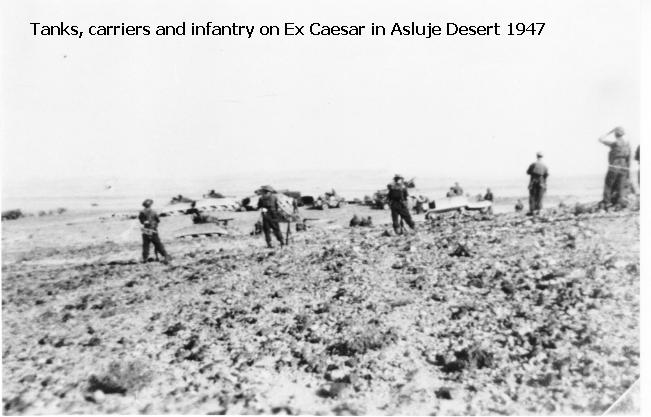
On 12th January 1947 Lt.-Colonel E. A. F. Macpherson, M.C., arrived in Egypt and assumed command of the Battalion, and a week later the rest in Egypt was over and the Battalion moved back to Palestine, where it was accommodated in a tented camp at Quastina, on the main Gaza-Ramleh road and about 25 miles north of Gaza. In this predominantly Arab country, duties were not unduly heavy.

           Besides the normal main-gate and perimeter guards, one detachment of platoon strength was stationed at Al Jura, as a reserve force on the beach, to deal with any attempt at illegal entry. Accommodation and amenities in camp were an improvement on Moascar. There was reasonable opportunity to train, and all companies were able to fire their annual musketry course. The first quarter of 1947 proved an unlucky period for the Battalion. During a field firing exercise in the Sinai Desert, a shell fell short on Battalion Headquarters; Lt. J. D. Bethune received wounds from which he died on the way to hospital. Pte. Winton also was wounded. A few days later C.Q.M.S. Farquharson died suddenly in hospital, and in March C.S.M. A. Logie died of a sudden heart attack.

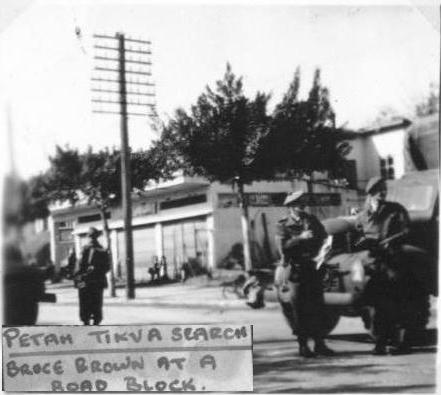
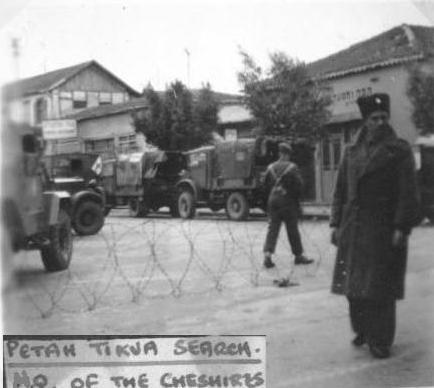
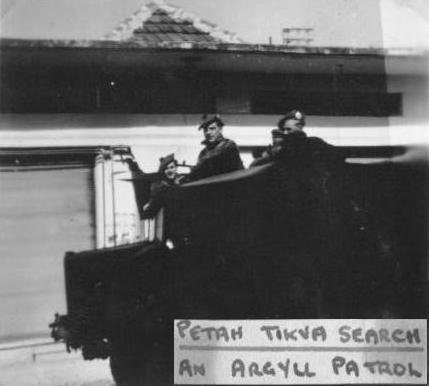
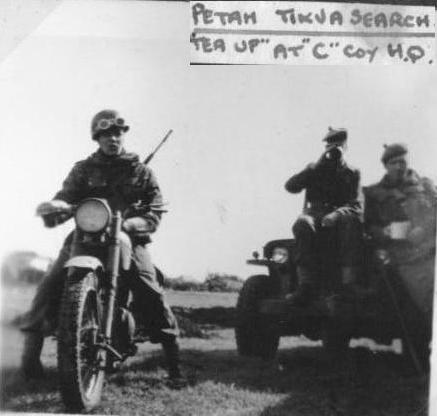
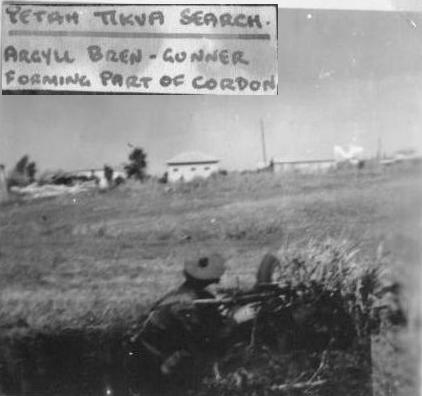
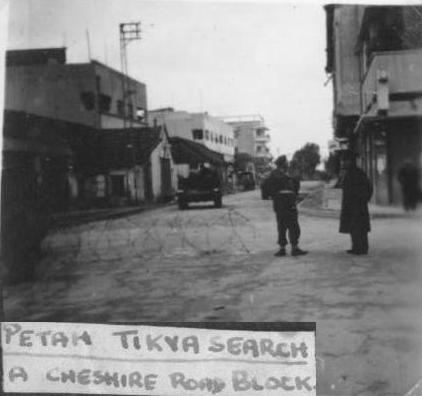
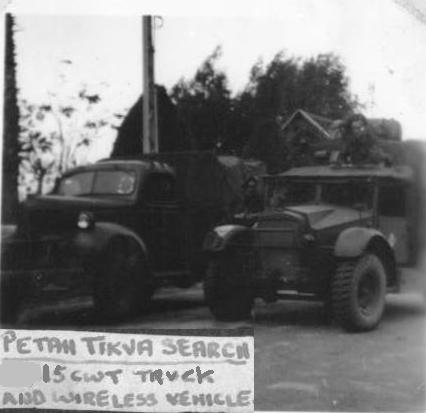
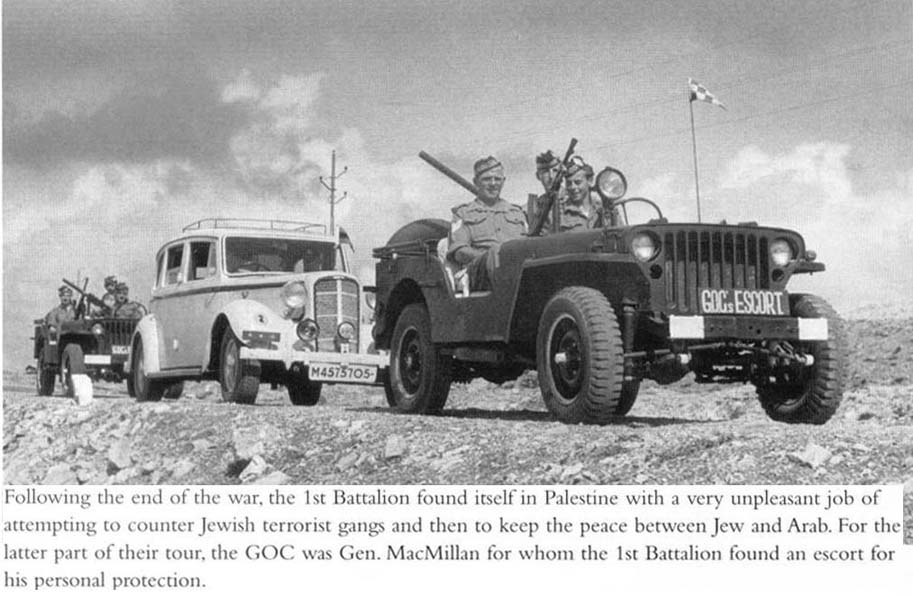
Prior to his leaving Palestine, the G.O.C., Lt.-General Sir Evelyn Barker, K.B.E., C.B., D.S.O., M.C., visited the Battalion, and on i6th February the Colonel of the Regiment, Lt.-General G. H. A. MacMillan, C.B., C.B.E., D.S.O., M.C., now appointed G.O.C., stayed for a night with the Battalion and took the salute at the Annual Commemoration Service the following day.  The only operational duty that fell to the Battalion during this first quarter was the cordoning of Petah Tiqva, on 27th January, during a search for kidnapped British personnel. The operation lasted two days. There was ample opportunity for sport. Division and Brigade staged inter-unit football competitions; Rugby football, hockey and cross-country running were all popular, while on l0th February the Battalion held a Gymkhana in which many novelty races were included. By the end of March the 1 K.O.S.B., and 1 R.I.F., comprising the other two battalions of 8th Infantry Brigade, and Brigade Headquarters, had moved back to Jerusalem, whither the Battalion was due to follow in the middle of April.

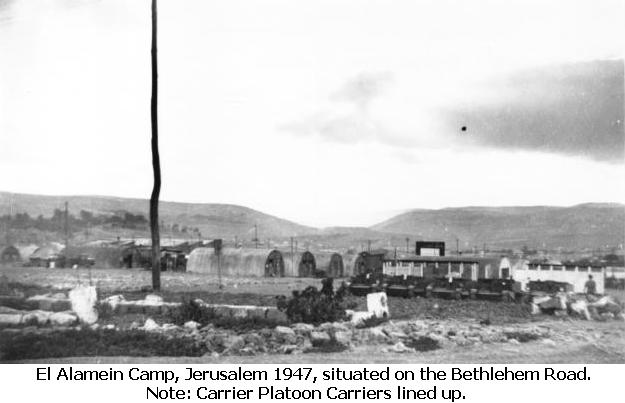
    The Battalion returned to Jerusalem on 14th April 1947, and its Headquarters was set up in Alamein Camp, on the southern outskirts of the city; it was a well-sited camp, partly tented and partly hutted. The Battalion was dispersed round the area; two companies guarded Zone 'A', where the bulk of the civil administration was housed, and one company supplied guards over Government House and the G.O.C.'s residence.

            In Palestine, heavy guard and operational duties did not permit the holding of ceremonial parades to mark occasions; nevertheless it was a period of many social events at which the pipes, drums and dancers of the Battalion played an important part. On 15th May the bands of 1 A. & S.H. and 2 R.I.F. combined to play Retreat in King George V Avenue; they drew large crowds of troops and civilians. A few days later the Arab Legion pipes and drums combined with those from the Battalion to play Retreat in barracks. The Arab Legion band had received instruction from Drum-Major Robson and Pipe-Major McGlinn. At the Government House Reception, on the occasion of the King's Birthday, the pipes and drums were again in demand, and the dancers gave an exhibition Foursome and Argyll Broadswords.

            The announcement of the award of the George Medal to Lt. J. L. Masson was received with great satisfaction by all ranks of the Battalion. Lt. Masson had shown great gallantry in dismantling time bombs set by the terrorists, and the official citation ends with the following words:

            'Lt. Masson has on two separate occasions shown courage and determination beyond his normal duties which has resulted in the saving of several lives. His examples of leadership and personal gallantry are an inspiration to all.'

            At the beginning of June, Lt.-Colonel E. A. F. Macpherson, M.C., left for home on a duty visit and Major A. N. W. Kidston assumed command temporarily in his place. Lt.- Colonel Macpherson resumed command in July on his return from U.K.

            The Battalion remained on in Jerusalem until 26th September, the day on which the Secretary of State to the Colonies announced to the General Assembly of the United Nations Organisation that Britain agreed that the Mandate should be terminated as soon as possible and that Palestine should become an independent State. The statement went on to declare that Britain would support any plan which was fully acceptable to both Arabs and Jews, but would not undertake to implement any policy by force of arms. If no settlement was found acceptable to both sides, then any U.N.O. recommendation must be accompanied by a clear ruling as to how it should be carried out. This statement was received with cautious approval by the Arabs, but it took the Jews by surprise, as they were unprepared for it. To begin with, neither side took the announcement seriously, and it had to be repeated many times before it was really believed.

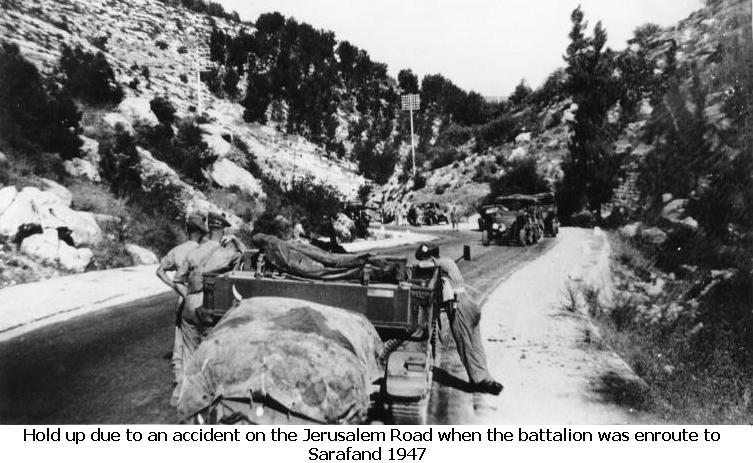
            There is little to record during this second tour of duty in the city—the work was always exacting, unpleasant and extremely monotonous, but in spite of this the morale of the Battalion remained high and the work of the sentries on gate duty and the general demeanour of all ranks was the subject of many laudatory comments in the local Press. There can be no doubt but that everyone was very tired, but the fact that they were able to conceal it and carry out their duties with undiminished efficiency was stressed by the Brigade Commander, Brigadier J. G. Bedford-Roberts, in his farewell address to the Battalion. The move to Sarafand, which took place on 27th September, was welcomed by all ranks.

It was a pleasant change from Jerusalem; accommodation was good, there was a cinema, shopping centre and an excellent N.A.A.F.L, and there were ample facilities for sport of all kinds. There was a big reduction in numbers required for internal security duties, and it was possible for companies, in turn, to be struck off all duties for training. The Battalion hockey and football teams both did well; the former won the South Palestine District Championship while the latter reached the semi-final of the Command Championship.

            All went well until the policy of 'Partition' was announced on 30th November 1947. This led to an immediate increase in tension, with a corresponding increase in guard and other internal security duties. Trouble between the Arabs and the Jews started within forty-eight hours of the announcement, and it became necessary to escort Arab and Jewish W.D. workers to and from their places of employment. This involved morning and evening convoys, and they, together with the increased duties made necessary by the renewal of inter-racial strife, occupied the whole time of the Battalion; indeed, so acute was the man-power situation that guards were frequently on duty for seventy-two hours at a time.

Click picture to enlarge.


            On 8th December the escorted convoys ran into trouble near the Jaffa-Tel Aviv border. The morning convoy was fired on and grenades were thrown, but no casualties resulted. In the evening the convoy was again fired on and a thirty-minute battle ensued, during which Pte. Kane was killed and Pte. Shaw wounded.

So it went on for the rest of the month, morning and evening escorts to convoys constantly met trouble; frequent excursions were made, in co-operation with the Palestine Police, to stop fighting between Arabs and Jews; but in these operations the Battalion suffered no further casualties. By the beginning of January the situation in Palestine had deteriorated to such an extent that it could be said that active preparations for civil war between Jews and Arabs were in full swing. In order to preserve law and order it was decided that, when necessary, heavier weapons than those possessed by Jews and Arabs must be used. The policy remained that no more force than the situation demanded would be used, but preparations were made for the employment of heavier weapons such as fighter aircraft, field guns, tanks, piats, and 2-in. mortars, and conditions under which they should be used were notified to all ranks. There were many incidents in January, and these included the blowing up of roads and the removal of lines from the railway in an attempt to paralyse communications both by road and rail.

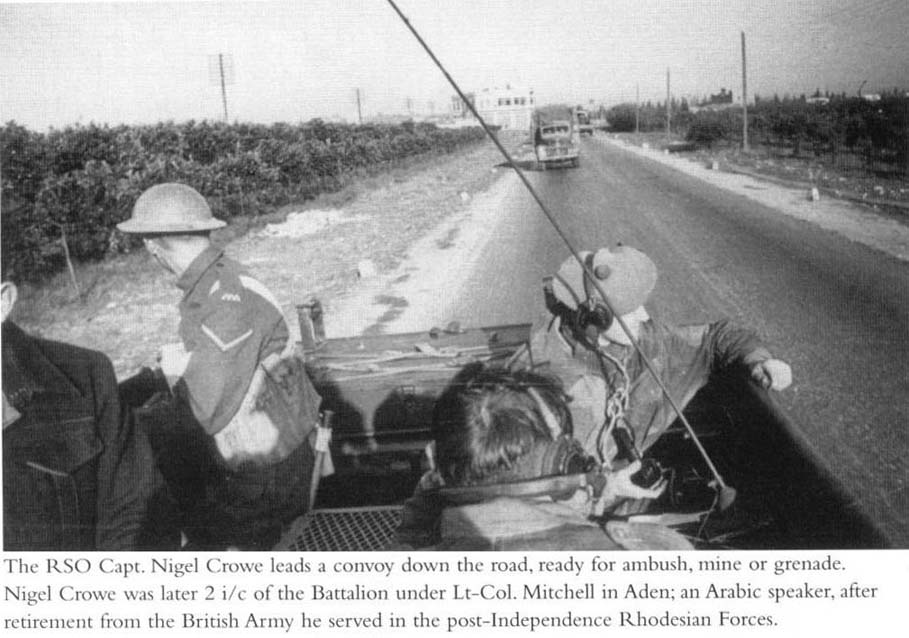
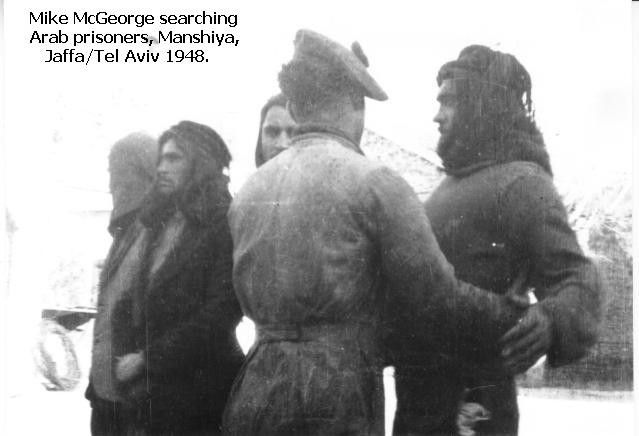
            On 3rd February the Battalion left Sarafand and relieved 1 K.O.S.B. in Lydda. The 3rd Infantry Brigade, which the Battalion now joined, had three sets of commitments, the most important of which was a permanent detachment of two companies on the Jaffa-Tel Aviv border; one of these companies had to guard the Jaffoon cantonment, which housed the civil administration and police offices, while the other enforced a nightly curfew on the mixed Arab and Jewish quarter of Manshiya. This area was the 'no-man's-land' between Jaffa and Tel Aviv. 'B' and 'D' Companies and three sections of carriers from 'S' Company took over this commitment on 5th February. During the fourteen days the Detachment occupied this trouble spot there were frequent clashes with both Arabs and Jews, during which one other rank was wounded. On 19th February 'B' and 'D' Companies were relieved by 2 Royal Lincolns, whereupon the Battalion took over the second of the Brigade commitments, the patrolling of the main road from Ramie to Jaffa. Here again there were many incidents, the most serious occurring on 29th February, when the immediate action platoon was called out to Rehovot, where a troop train had been blown up and many casualties had resulted. The 4/7 Dragoons relieved the Battalion on 1st March to allow it to take over the third of the Brigade commitments, static guards at Latrun and Bab el Wad pumping-stations and Ramie telephone exchange. To these were added the patrolling of the railway line near the scene of the outrage on 29th February.


Many thanks to Mike McGeorge who sent me Sandy Ward's collection of photograph's of his time in Palestine. This selection is of the Rehovot train bombing.

Click picture to enlarge.


            Back in the Manshiya locality again on 16th March, a platoon from the Battalion was involved in a serious incident on 21st March. A Jewish convoy which it was escorting was heavily fired on by a band of Arabs, and in the ensuing action the platoon commander, 2/Lt. MacKinnon, was killed. Eleven of the attackers were killed and fourteen captured, and the convoy succeeded in reaching its destination.

On l0th March Lt.-Colonel G. L. Neilson assumed command of the Battalion vice Lt.-Colonel E. A. F. Macpherson, M.C., who, on promotion, was appointed to command 61 Lorried Infantry Brigade.

          By the beginning of April the situation in Palestine was approaching its climax. Many and varied were the tasks that fell to the Battalion at this time. The Arabs were now operating in large bands of from 300 to 500 and were constantly staging attacks against the Jews and looting British and Jewish installations in order to keep themselves supplied. To cope with this situation the Jews also increased the size of their bands, and Headquarters Palestine organised two mobile columns and held them in readiness to move to any part of the country. The fact that no untoward event was to mar the final evacuation was a tribute to the careful planning behind all the detailed arrangements and to the alertness of all ranks who had to implement these plans.

        Incidents were frequent, many of which necessitated the intervention of the immediate action platoon. Slit trenches were dug in the vicinity of offices, stores, and billets as protection in the event of an Arab-Jewish battle for Lydda Airport. On 24th April the Jewish staff abandoned the airport, and among them were the flight control staff and the hotel staff. The following day the Arabs commenced to loot the airport. In spite of sabotage by Jewish operators before leaving on the 24th, the British and Arab staffs did succeed in keeping the airport functioning.

            By 28th April the situation in the 'no-man's-land' between Jaffa and Tel Aviv had deteriorated; that day the Jews had launched a strong attack on Jaffa through the Manshiya quarter, and the situation became beyond the power of two companies to control. At this time the garrison consisted of two companies of 2 R.I.F., and as a first step to strengthen it 'B' Company was ordered into Jaffa at 11 a.m. on the 28th. On its arrival it found that some 500 of the Irgun Tzvai Leumi had crossed the boundary into Jaffa with the intention of capturing the town. They were being held by some 200 Arab Irregulars, and a weak company from the Royal Lincolns supported by four Cromwell tanks of the 4/7 Dragoon Guards. The fighting was taking place on a 300-yard front between the Jaffoon cantonment and the sea. On arrival, 'B' Company took over a portion of this line. That evening, back at Lydda, the rest of the Battalion less 'A' and 'C' Companies received orders to move into Jaffa as soon as possible. They arrived at 7 a.m. the following morning and found that Jaffa was a very different place to the town they had known only a month before. Streets were now deserted, and many of them were piled with rubble and impassable for wheeled traffic, shop shutters were down, and hurriedly built emplacements and road-blocks emphasised that a state of war existed in the town. On arrival, 'D' Company took up position on ‘B' Company's left, thereby completing the line from the cantonment to the sea. 'S' Company was kept as a mobile reserve.

            Lt.-Colonel Neilson now took over command of all the troops in Jaffa, which consisted of 1 A. & S.H. less two companies, two companies of the Royal Irish Fusiliers, one company Royal Lincolns, one troop of tanks of 4/7 Dragoon Guards and a troop of armoured cars of 1 Life Guards. In support were a battery of 41 Field Regiment Royal Artillery, a squadron of R.A.F. and two destroyers which lay off-shore. On the 30th, 'A' and 'C' Companies rejoined the Battalion in Jaffa and took over the defence of the cantonment from the two companies of the Royal Irish Fusiliers, who were then withdrawn from Jaffa. For two days, constant, and often heavy, small-arms and mortar fire were directed against the Battalion positions by the Jews. On the 30th they occupied a building thirty yards in front of 'B' Company's right platoon and opened fire on it. 'B' Company replied with all available weapons, but it required the intervention of two armoured cars before the Jews were forced to withdraw after suffering heavy casualties. At times it was necessary to call on the field artillery, while the tanks of 4/7 Dragoon Guards were constantly in action. To the surprise of all, the Jews asked for a truce on 1st May and accepted the terms offered, which were as follows:

The Battalion was to move forward to a line running along the municipal boundary and there to construct and man a series of frontier control posts. These were to be on all roads leading from Jaffa to Tel Aviv, and for every British post there was to be a Jewish one ten to twenty yards away. No armed Jew was to be allowed south of this line and no armed Arab north of it. The Haganah, who had asked for the truce, undertook to clear all Irgun and Stern Gang from the area, while the British were to restrain the Arabs.


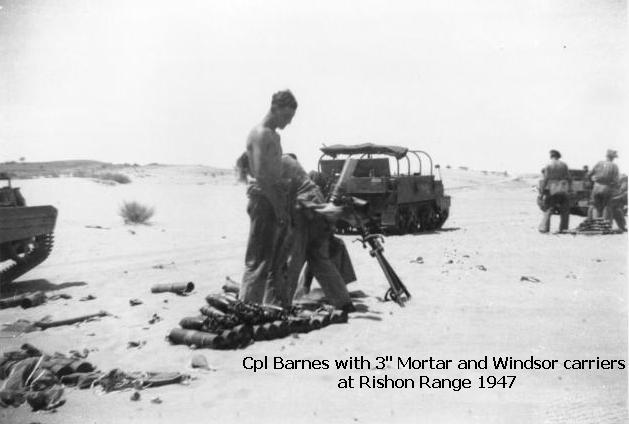
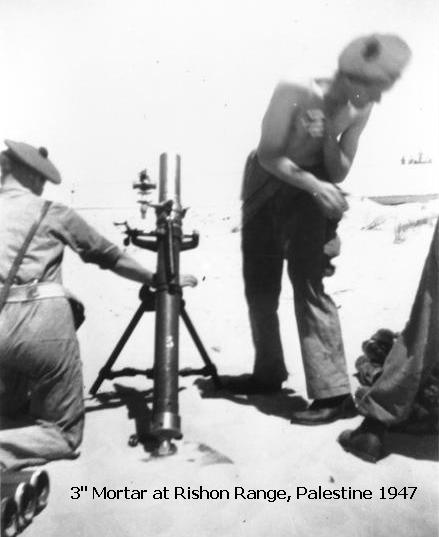
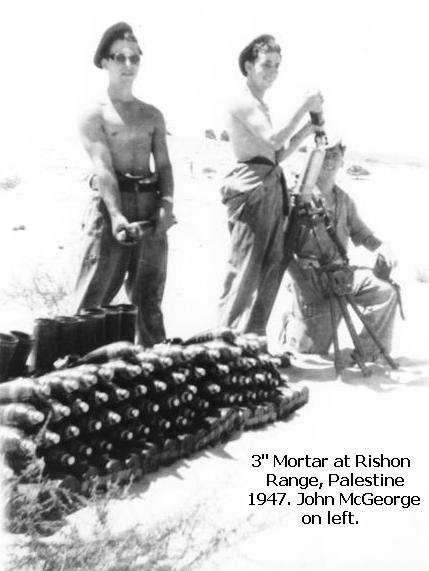
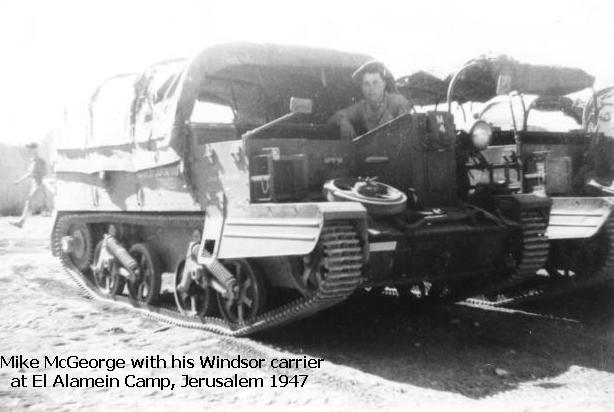
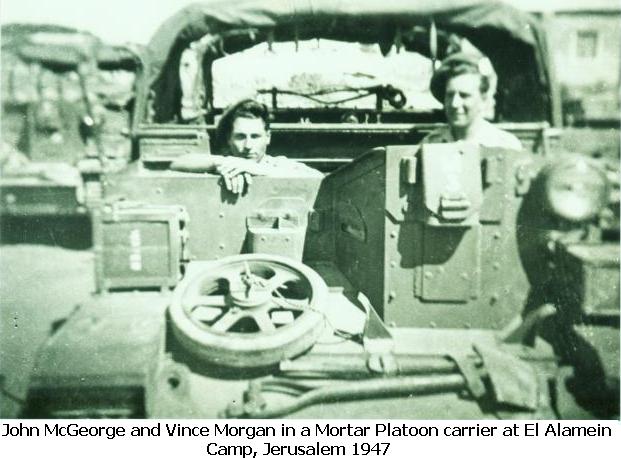
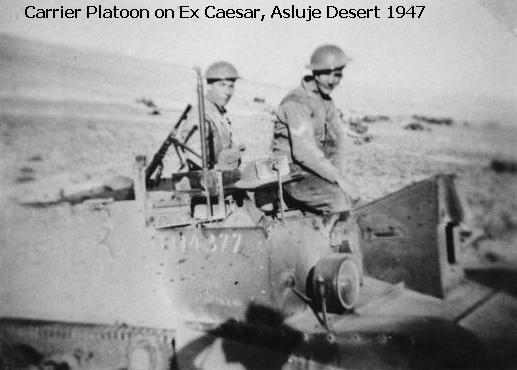
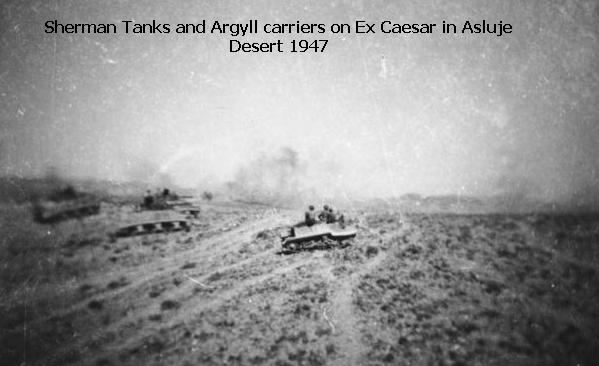
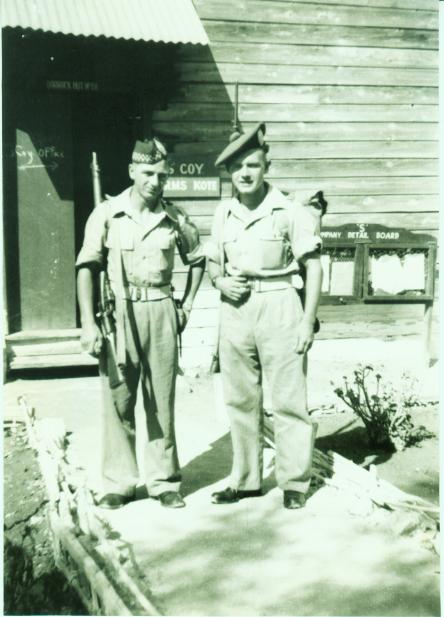
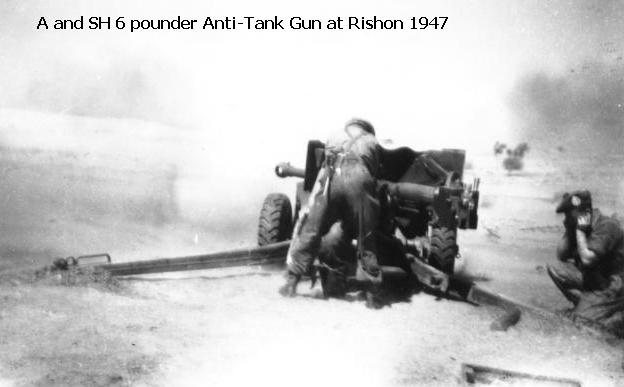
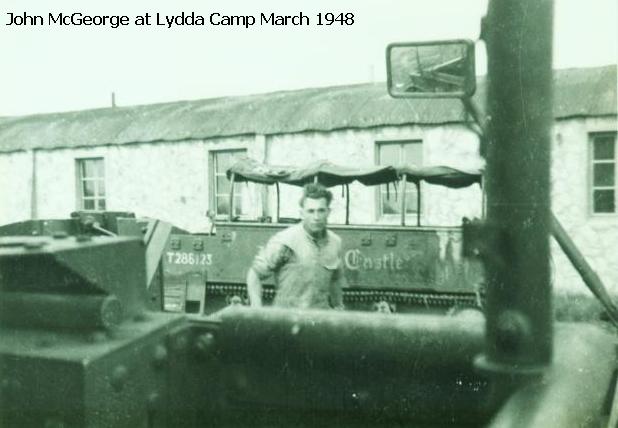
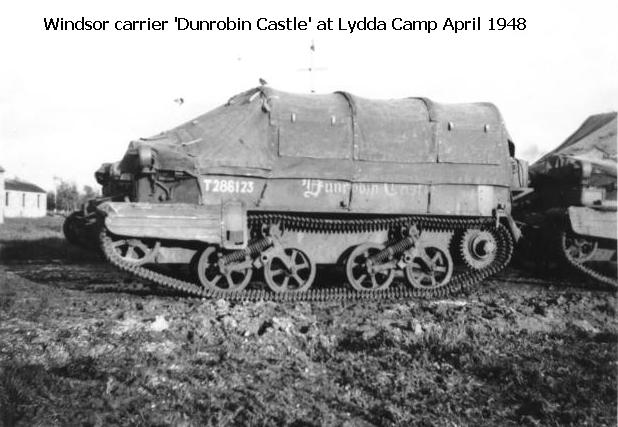
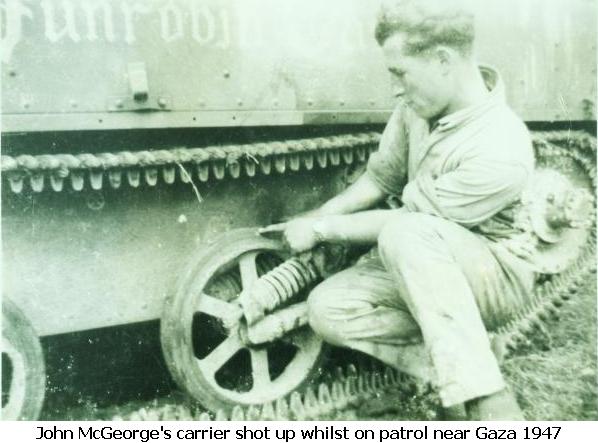
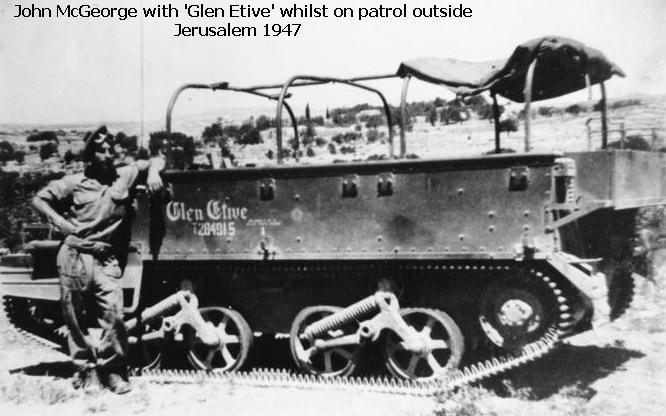
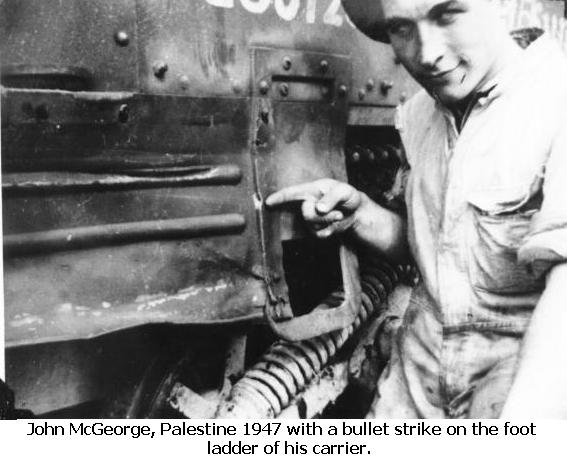
A collection of photographs sent to me by Mike McGeorge who along with his brother John drove carriers in Palestine.

Click picture to enlarge.


            It was at 1.45 p.m. that 'B' and 'D' Companies started to advance to their new positions, and this had to be done with great caution as the power of the Haganah to remove the Irgun and Stern gangsters was suspect. These companies had three roles to fulfil, to search all houses for booby traps and terrorists who had not obeyed the order to withdraw, to give covering fire to the searchers, and lastly to face into Jaffa to prevent the Arabs from following up. By 3 p.m. the move was completed without incident. One company of Royal Irish Fusiliers came under command and occupied the positions vacated by 'B' and 'D' Companies with the task of preventing armed Arab intervention from Jaffa. Almost simultaneously with the truce, Arab forces began to withdraw and many Arabs were evacuated by sea. This was to simplify the forthcoming evacuation of the area, which, with both sides in close contact, would have presented a difficult problem.

The crisis was now over, the truce was respected and free movement was possible in and around both British and Jewish frontier posts. In the few days following the truce the garrison was reduced until only the Battalion remained with one company of Royal Irish Fusiliers and a troop of tanks under command.

            All thoughts were now on the coming evacuation. It was anticipated that the Battalion would leave as soon as the Mandate was relinquished on 15th May, and all doubts were set at rest when orders for the evacuation of Jaffa were issued on the 13th. The 14th was to be spent at Lydda Camp, and on the 15th the move to Egypt was due to start. On 12th May the G.O.C. Palestine, Lt.-General MacMillan, visited the Battalion and went round its posts. On the 13th the Battalion started to thin out, and all troops that could be spared were sent to Lydda camp. At 6 p.m. the Union Jack above the District Commissioner's Office was lowered for the last time, the Last Post was sounded, while a platoon from 'A' Company acted as Guard of Honour. Early on the 14th all troops and the civil administration evacuated Jaffa and returned to Lydda. The evacuation went smoothly and no shots were fired. The Haganah followed up, but did not attempt to interfere. At this time Jaffa was almost a deserted town, only about 3000 of its normal population of 50,000 remained, and there was no obstacle in the path of its immediate occupation by the Haganah. Except for some desultory firing near the German colony of Wilhelma, the last night in Palestine was quiet. The Battalion was under way at 6.30 a.m. on the 15th. Just south of Gaza the column met the forward elements of the Egyptian Army. There were no incidents, and the Egyptians gave the British column a friendly cheer as it passed by. As darkness fell, the Battalion reached the Egyptian border and was played over it by its pipers.

            After a day of rest at Rafah, the Battalion moved off again at 4.45 a.m. on 17th May to cross the Sinai Desert. It was a tiring drive, aggravated by many mechanical breakdowns and a blazing sun, but by 7 p.m. the column reached the east bank of the Suez Canal, where it spent the night. The following day the journey was completed, when the Battalion moved into camp at El Tahag, a camp which had been occupied on several occasions by the 1st Battalion during the 1939-45 War.


            For two and a half years the Battalion had been carrying out the most exacting task that a soldier can be confronted with, duties in aid of the civil power. In Palestine these duties were more difficult and complicated than usual, for it was not the straightforward one of putting down a rebellion, but that of keeping the peace between two communities who had nothing in common and either of whom was likely to cause trouble. To add to the difficulties it was the transition period between war and peace, with battalions composed of short-service personnel of many regiments.

            Through it all, morale remained consistently high. The ever-present element of danger was more of a spur than a deterrent, and operational periods were regarded as a welcome break to the monotony of guarding barbed-wire perimeters, and it seems certain that it was just these operational periods that were the principal factor in maintaining high morale right up to the end.

            The heaviest responsibility fell on the junior leaders, officers and N.C.Os.—and, to their eternal credit, despite provocation, boredom and frustration, they never allowed themselves or their men to forget that their mission was to keep the peace. They did not realise it at the time, but they held the Battalion together in a very difficult period of re-organisation for the Army as a whole.

             The last to leave Palestine was the Colonel of the Regiment, Lt.-General MacMillan, As G.O.C. during the last fifteen months of the Mandate, he carried on his shoulders a tremendous weight of responsibility, and it was a fitting climax to his work in Palestine that he should have been the recipient of a spontaneous tribute from all three Services on leaving its shores. He embarked in H.M.S. Phoebe, and as it steamed away, aircraft from H.M.S. Triumph and from the R.A.F. flew past in salute, while two destroyers and a frigate, which had preceded the Phoebe in line ahead, altered course 180 degrees and steamed by, while the ships' companies each gave three cheers for General MacMillan. The last tribute was left to his own Regiment, when it provided the Guard of Honour to welcome him as he stepped ashore at Port Said.

 CASUALTIES IN PALESTINE

Killed in Action and Died of Wounds


2/Lt. L. Mackinnon                          Pte. Buchanan

Cpl. Alcorn                                    Pte. Kane


Wounded


            2/Lt. McKendrick and 6

            O.Rs., 24th October 1946

            Pte. Shaw

            Pte. Nugent

      Pte. TL Barnes

    Killed as Result of an Accident


            Lt. J. Bethune    

            Pte. Gibson

            L/Cpl. Rankin    

            Pte. Logan

            Pte. Clifford

Died


            C.S.M. A. Logie

            C.Q.M.S. Farquharson

            Pte. F. A. Smith


AWARDS AND DECORATIONS


George Medal: Lt. James Leiper Masson


The following officers, warrant officers, N.C.Os. and men were Mentioned in Dispatches for gallant and distinguished services in Palestine:

27th Sept 1946 to 26th March 1947

Maj. J. A. Penman, M.C.   

Sgt. J. G. Hogg

Maj. H. S. Spens, M.B.E., M.C. 

Cpl. J. Scholey


27th March 1947 to 26th Sept 1947

Capt. R. B. Gardiner   

Cpl. J. P. McAlpine     

Capt. R. A. R. Stroyan            

Pte. R. A. G. Watt

C.S.M. D. M. Smith 

27th Sept 1947 to 26th March 1948

Brig. E. A. F. Macpherson, M.C.   

Capt. J. A. Gibb

Lt.-Col. G. L. Neilson                        

Pte. T. Miller

Capt. W. McGuigan

27th March 1948 to 30th June 1948

Lt. T. J. McAllister


 Sources

  History of the Argyll and Sutherland Highlanders 1st Battalion 1939 -1954

Thin Red Line Magazines

Ray Vearnals


Colchester 1948 - 1949


Return to Home Page


Updated : 09 April 2008